
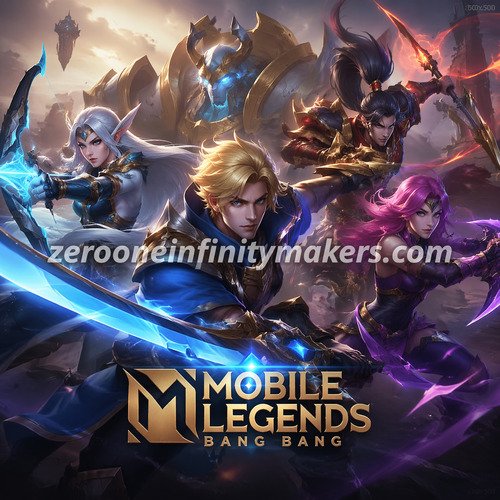
zerooneinfinitymakers.com – A successful team in Mobile Legends: Bang Bang needs more than five players who choose powerful heroes. Each member must contribute something valuable, and the combination of their abilities should create a lineup capable of handling different situations throughout the match. Team composition influences how a team controls the early game, protects its damage dealers, approaches objectives, and responds to enemy attacks. A lineup filled with heroes who deal enormous damage may look threatening, but it can struggle when nobody is durable enough to initiate combat or protect vulnerable teammates. Likewise, a team with several defensive heroes may survive difficult engagements but lack the damage needed to eliminate opponents or finish important objectives.
The first principle of building a balanced composition is understanding the responsibilities of different roles. Tanks and roamers generally provide protection, vision through map presence, and opportunities to initiate or interrupt fights. Fighters can contribute sustained damage, durability, and pressure in side lanes. Assassins are often selected to eliminate vulnerable targets and punish poor positioning. Mages provide magical damage, area control, and abilities that can influence team fights from a distance. Marksmen usually become important sources of sustained physical damage, particularly as the match progresses. These roles are not completely separate, because some heroes can perform multiple functions, but understanding their primary responsibilities helps prevent major weaknesses in a lineup.
A balanced team should also consider how its members support one another. A marksman with strong late-game damage may become an excellent centerpiece for a composition, but that hero needs teammates who can create enough space to attack safely. A mage with powerful area abilities may become more effective when a tank can hold enemies in a suitable position. An assassin may require crowd control from teammates to prevent an enemy damage dealer from escaping. These interactions show why choosing individually strong heroes does not automatically produce a strong team.
Players should therefore consider the complete lineup rather than evaluating each selection independently. Before choosing a hero, examine what the team already has and identify which responsibilities remain unfilled. If the lineup already contains several fragile damage dealers, selecting another hero with limited defensive utility may create additional problems. Choosing a durable fighter or a hero with reliable crowd control could provide greater value. The objective is to create a composition in which every member has a purpose and the team can function effectively even when the match develops differently from expectations.
Combining Physical Damage, Magic Damage, and Crowd Control
Damage distribution is another important part of team composition. A lineup that relies almost entirely on physical damage may become easier for opponents to defend against when they invest in suitable physical protection. The same problem can occur when a team depends heavily on magical damage. A composition with different damage sources creates more difficult defensive decisions for the opposing team because they cannot focus entirely on one type of resistance.
Physical damage is often supplied by marksmen, fighters, and assassins, although individual hero designs can differ considerably. Magical damage generally comes from mages and certain heroes whose abilities rely on magic-based attacks. When both damage types are represented, opponents must evaluate their equipment choices more carefully. This can create opportunities for teammates to deal meaningful damage even when one source becomes less effective against a particular enemy.
However, damage diversity alone does not guarantee a successful lineup. A team also needs ways to control enemy movement and create opportunities for attacks. Crowd control abilities can interrupt important actions, prevent opponents from escaping, and protect vulnerable teammates from aggressive enemies. Some heroes provide reliable single-target control, while others have abilities that affect several opponents within an area. Combining these tools can make a team fight easier to organize because teammates have clearer opportunities to follow up with damage.
The amount of crowd control should be considered alongside the team’s damage potential. A lineup with several heroes who can disable enemies may control fights effectively but struggle to finish targets if its damage is insufficient. Conversely, a lineup with enormous damage potential but very little control may find it difficult to hit mobile opponents. The ideal combination depends on the heroes available and the strategy the team intends to follow.
Players should also think about the reliability of their abilities. Some control skills require precise aiming or favorable positioning, while others are easier to apply during coordinated engagements. A composition that depends entirely on difficult-to-land abilities may become inconsistent, especially when teammates have limited communication. Having a mixture of reliable control and high-impact abilities can make the lineup more adaptable. This balance helps the team create opportunities without relying on one player to execute a perfect combination every time.
Evaluating Early-Game and Late-Game Strength
Every hero has a particular power progression, and understanding these differences is essential when building a team. Some heroes can apply considerable pressure during the opening minutes, while others need additional levels and equipment before reaching their full potential. A lineup should account for these differences because the team’s strength can change considerably as the match develops. Choosing five heroes with similar weaknesses during the early game may create a difficult opening, while selecting only late-game specialists can make it challenging to contest early objectives.
Early-game heroes are valuable because they can help establish control before opponents become stronger. They may possess effective damage, reliable crowd control, or abilities that make it easier to pressure lanes. A team with strong early-game potential can use these advantages to secure favorable engagements and create opportunities around important objectives. However, early strength should be used intelligently. Players who become overly aggressive may give away their advantage through unnecessary fights or poorly timed rotations.
Late-game heroes offer a different type of value. These characters may become increasingly dangerous after completing important equipment and reaching higher levels. Marksmen often benefit significantly from additional attack speed, critical damage, and other offensive items. Some mages and fighters also gain access to stronger combinations as their equipment develops. A team with several late-game heroes should understand that its early responsibilities may involve surviving safely and collecting resources rather than constantly searching for fights.
The most effective compositions often combine different power timings. Having at least some early-game presence can prevent opponents from controlling the entire map before the team’s stronger late-game heroes become ready. At the same time, retaining enough scaling potential ensures that the lineup does not lose all its influence after the opening stage. This creates a more flexible match plan because the team can respond to early opportunities while still preparing for later engagements.
Players should also consider how their heroes perform during different stages of the game. A character who dominates the lane may become less effective in large team fights, while another hero who struggles during the opening minutes may become extremely valuable during objective contests. Understanding these transitions helps players make better decisions about when to fight, when to farm, and when to prioritize protecting certain teammates. A well-designed composition should have a meaningful contribution throughout the match rather than depending entirely on one short power window.
Selecting Heroes That Can Counter the Opposing Lineup
Building a strong composition does not end with balancing the team’s own roles. Players must also examine the opposing lineup and consider which heroes could create the greatest problems. A composition that looks excellent in isolation may struggle against specific enemy abilities. For example, a team that relies heavily on stationary damage dealers may have difficulty against opponents with strong diving potential. A lineup with limited mobility may become vulnerable to heroes who can quickly enter combat, eliminate a target, and escape before teammates respond.
Counter-picking requires understanding what makes an enemy hero dangerous. If the opposing lineup contains several heroes with powerful initiation abilities, selecting teammates with reliable defensive tools can help reduce the threat. If enemies depend on sustained healing, choosing heroes or equipment options that can reduce recovery may become useful. Against a team with several fragile damage dealers, heroes capable of reaching the backline may create opportunities to disrupt their formation.
However, selecting a counter should not mean sacrificing the entire team’s balance. A player might choose a hero that performs well against one specific opponent but leaves an important team responsibility unfilled. For example, selecting another assassin to deal with an enemy marksman may create excessive damage dependence while leaving the team without reliable frontline protection. A good counter-pick should solve a problem without introducing a larger weakness elsewhere.
Players should also consider how difficult it will be to execute the chosen counter. Some heroes are theoretically effective against particular opponents but require precise mechanics, excellent timing, or strong coordination. If a player is unfamiliar with that hero, the counter may not provide its expected value. Choosing a familiar character with useful defensive or offensive tools can sometimes be more effective than selecting an unfamiliar specialist.
Another important factor is recognizing that counters are influenced by the actual match situation. A hero may have a favorable ability interaction but still struggle when the opposing player has a significant equipment advantage. Team composition creates opportunities, but it does not guarantee success. Players must continue observing enemy behavior and adapting their decisions as the match progresses. The best counter-pick is one that fits both the opposing lineup and the player’s ability to use it effectively.
Creating Synergy Between Heroes and Their Abilities
Hero synergy describes how different characters become more effective when their abilities work together. This is one of the most important elements of team composition because it determines how easily a lineup can create coordinated plays. Two heroes may be strong individually, but their abilities might not complement one another. Meanwhile, characters with different strengths can become extremely effective when their skills create opportunities for coordinated attacks.
A common example is combining initiation with follow-up damage. A durable hero may possess an ability that gathers or disables several opponents. A mage with powerful area damage can then use that opportunity to hit multiple targets. If the timing is coordinated, the combination may create a significant advantage during a team fight. The initiator does not need to eliminate the enemies alone because the rest of the team is prepared to follow up.
Protection-based synergy is equally important. Some heroes are particularly effective when paired with teammates who can provide shields, healing, defensive crowd control, or additional mobility. These combinations can help fragile damage dealers survive against aggressive opponents. A marksman who has difficulty maintaining distance may become much more effective when a roamer can interrupt enemies attempting to reach them. Similarly, a mage who needs time to cast abilities can benefit from teammates who control the battlefield and prevent opponents from approaching.
Mobility can also create useful combinations. Heroes who can quickly enter a fight may work well with teammates who possess abilities that slow or restrict enemy movement. This can make it harder for opponents to escape once an engagement begins. However, players must coordinate their timing carefully. If one hero enters combat too early while the rest of the team remains far away, the intended synergy may disappear and the initiator can become isolated.
Synergy should also include the team’s ability to respond when an engagement goes wrong. Some compositions have strong offensive combinations but limited ways to retreat or protect teammates. Others can defend effectively but struggle to convert a successful engagement into meaningful progress. When selecting heroes, players should consider not only how abilities work during the ideal situation but also what happens when the enemy survives the initial attack. A flexible composition should have ways to continue fighting, disengage, and protect important teammates when necessary.
Adjusting the Lineup for Solo Queue and Team Coordination
The best team composition can vary depending on how players communicate and coordinate. A lineup designed for a highly organized team may depend on precise timing and planned ability combinations. In solo queue, however, teammates may have different playstyles, levels of experience, and expectations. A composition that requires perfect coordination can become unreliable when players do not communicate consistently. This makes flexibility especially important when choosing heroes for matches with unfamiliar teammates.
In solo queue, players should consider selecting heroes who can contribute independently while still supporting the team. A hero with reliable wave clearing, useful defensive abilities, or flexible damage potential can remain valuable even when teammates do not follow every planned engagement. This does not mean ignoring team composition and choosing selfishly. Instead, it means recognizing that certain abilities are more dependable when coordination is limited.
Players should also avoid creating unnecessary role conflicts. If several teammates insist on selecting heroes who require the same resources or prefer the same positions, the team may struggle to distribute responsibilities effectively. A composition needs enough variety to handle different situations. When possible, players should communicate their preferred roles and remain willing to adjust if the team has an obvious weakness.
In coordinated teams, composition can become more specialized. Players who regularly practice together may build strategies around specific ability combinations, coordinated rotations, and planned objective fights. They can choose heroes whose strengths depend on precise teamwork because they already understand how their teammates will respond. This creates opportunities for more advanced strategies, but it also requires practice before the composition becomes reliable.
Regardless of the game mode, players should remember that hero selection is only the beginning. A balanced lineup still needs proper farming, positioning, communication, and objective management. If teammates refuse to work together, even an excellent composition can struggle. On the other hand, a team with a slightly imperfect lineup may succeed through disciplined decisions and effective cooperation.
The most useful approach is to remain flexible without abandoning the team’s overall needs. Players should understand their preferred heroes, learn alternatives for different situations, and become comfortable filling roles when necessary. This improves the quality of team compositions and makes it easier to respond to unexpected selections. Over time, understanding both individual hero strengths and team-wide synergy can make the drafting process more strategic and less dependent on choosing popular characters.
Conclusion Mastering Team Composition in Mobile Legends: Creating Balanced Lineups for Every Match
Building an effective team composition in Mobile Legends requires players to think beyond individual hero strength. A successful lineup should combine damage, durability, crowd control, mobility, and the ability to perform different responsibilities throughout the match. Every hero should contribute something meaningful, and their abilities should complement the needs of the team rather than compete for the same purpose.
Understanding early-game and late-game power is equally important. Some compositions are designed to create pressure immediately, while others become stronger as their heroes collect equipment and reach higher levels. Combining different power timings can give a team more flexibility and prevent it from becoming dependent on one particular stage of the match. Players should also examine the enemy lineup and choose suitable responses without sacrificing their own team’s balance.
Synergy adds another layer of depth because heroes become more effective when their abilities support one another. Initiation, follow-up damage, protection, and mobility can create combinations that are difficult for opponents to handle. However, these strategies must match the level of coordination available. A complicated composition may be effective with an organized team but unreliable when communication is limited.
Ultimately, the best team composition is not simply the lineup with the most popular or individually powerful heroes. It is the combination that can perform its responsibilities, adapt to enemy threats, and create opportunities through teamwork. Players who learn to evaluate roles, damage distribution, hero synergy, and match conditions will make better selections and enter every game with a clearer understanding of how their team should operate.
