
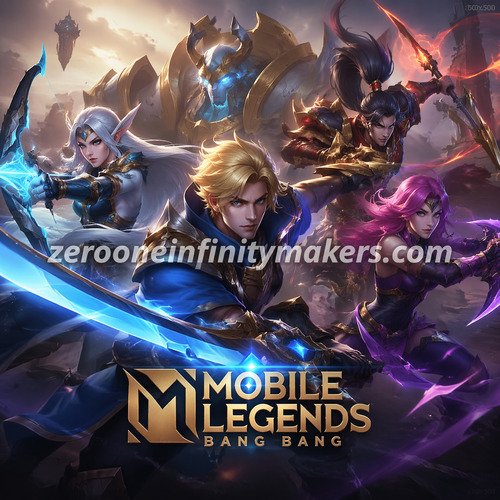
zerooneinfinitymakers.com – Many Mobile Legends players focus almost entirely on gameplay after entering the battlefield, but experienced competitors know that many ranked matches are influenced long before the first minion appears. The draft phase establishes the foundation for every strategy that follows. Choosing heroes without considering team composition often creates unnecessary weaknesses that become increasingly difficult to overcome, regardless of individual mechanical skill. A balanced lineup provides the flexibility needed to respond to different situations throughout every stage of the game.
A complete team usually contains a durable frontline, reliable damage dealers, crowd control, and enough mobility to contest objectives effectively. Tanks and durable fighters create space for teammates by absorbing damage and disrupting enemy formations. Marksmen gradually become the primary source of sustained damage as they complete important items, while mages contribute burst damage and valuable crowd control during team fights. Assassins specialize in eliminating vulnerable targets, and supports improve the team’s overall survivability through healing, shields, or utility abilities.
Selecting heroes only because they are personal favorites can create serious drafting problems. A lineup with four damage dealers and no reliable frontline may dominate isolated skirmishes but struggle during objective contests where protection and crowd control become essential. Similarly, choosing multiple heroes with weak early-game pressure can allow aggressive opponents to secure important objectives before the team reaches its strongest stage.
Flexibility during drafting greatly improves long-term consistency. Players who become comfortable using several heroes within their preferred role contribute more effectively than those who insist on one selection regardless of team needs. Adaptable players also respond more confidently when favorite heroes are banned or selected by opponents. This flexibility reduces unnecessary conflicts during hero selection while increasing the likelihood of building a balanced composition capable of handling different enemy strategies.
Drafting should therefore be viewed as the first strategic challenge of every match rather than a simple hero selection screen. Teams that begin with a strong composition naturally create more opportunities for success once the battle starts.
Understand Hero Synergy Before the Match Starts
Strong team compositions depend on more than simply selecting individually powerful heroes. The interaction between teammates often determines whether a lineup functions smoothly during real gameplay. Hero synergy refers to the way abilities, roles, and overall playstyles complement one another, creating coordinated combinations that are more effective than isolated individual performances.
Some heroes excel because they initiate fights with reliable crowd control, allowing teammates to follow with powerful burst damage. Others provide continuous protection that enables fragile carries to remain effective throughout extended engagements. Certain fighters create constant side-lane pressure, forcing opponents to divide their attention while the rest of the team controls major objectives elsewhere on the map. Understanding these relationships helps players identify combinations capable of producing consistent advantages.
Synergy also extends to overall game pace. Some lineups perform best during the early game by applying relentless pressure before opponents complete their core items. Other compositions intentionally prioritize scaling into the late game, relying on patience, efficient farming, and disciplined defense until their strongest heroes become fully equipped. Mixing heroes with completely conflicting strengths can create situations where no clear strategy exists, reducing overall coordination even if each individual hero appears strong on paper.
Communication during drafting significantly improves synergy. Players discussing preferred roles, comfort picks, or planned strategies create stronger compositions than teams making silent individual decisions. Even simple adjustments based on teammate selections frequently produce more balanced drafts capable of adapting to different battlefield conditions.
Recognizing hero synergy also improves confidence during gameplay. Players who understand how their heroes complement one another naturally coordinate rotations, objective contests, and team fights more effectively because everyone contributes toward a shared strategic identity established before the match even begins.
Counter Enemy Picks With Smart Decisions
An effective draft does not focus exclusively on friendly heroes. Understanding how to respond to opposing selections is equally important because every enemy pick provides valuable information regarding their likely strategy. Rather than selecting heroes independently, experienced players evaluate both team compositions throughout the drafting process and adjust accordingly.
Counter-picking involves selecting heroes capable of limiting the effectiveness of specific opponents. Durable frontline heroes may reduce the impact of burst assassins, while mobile heroes often perform well against slower skill-shot-dependent enemies. Crowd control can interrupt highly mobile targets, and defensive utility frequently protects vulnerable carries from aggressive divers. Recognizing these interactions allows teams to reduce enemy strengths without relying solely on superior mechanics.
However, counter-picking should remain balanced with personal comfort. Selecting an unfamiliar hero simply because it theoretically counters an opponent may produce worse results than choosing a familiar hero played confidently. Successful drafting therefore combines strategic awareness with practical experience rather than relying entirely on theoretical advantages.
Enemy compositions also reveal broader strategic intentions. A lineup filled with aggressive early-game heroes suggests frequent rotations and objective pressure during the opening minutes. Conversely, several scaling heroes indicate a greater emphasis on farming before major engagements. Identifying these patterns allows teams to adjust their own plans before the match begins instead of reacting only after the game has already developed.
Careful observation during drafting transforms the selection phase into an opportunity for preparation. Rather than viewing enemy picks as obstacles, experienced players treat them as valuable clues that help shape smarter decisions throughout the remainder of the match.
Executing the Draft Strategy During the Match
The draft only provides value if the chosen strategy continues after the loading screen. Every team composition naturally encourages certain styles of play, and understanding those strengths helps players make more effective decisions throughout the match. Instead of forcing identical strategies every game, successful teams adapt their gameplay according to the heroes they selected.
Aggressive early-game compositions should capitalize on their temporary advantages by contesting objectives, rotating quickly, and applying pressure before opponents complete important items. Waiting passively with heroes designed for early dominance often wastes valuable opportunities while allowing scaling lineups to reach their strongest stage uncontested.
Late-game compositions require greater patience. Rather than forcing unnecessary engagements, these teams focus on efficient farming, defending structures, and minimizing avoidable mistakes until core equipment is completed. Once key heroes become fully equipped, their increased damage and survivability often create favorable conditions for decisive objective fights.
Balanced lineups provide flexibility, allowing players to adapt according to battlefield conditions instead of following rigid plans. These compositions can defend patiently when necessary while also recognizing opportunities for aggressive plays after securing temporary advantages. Understanding the intended strengths of the draft encourages smarter decisions throughout every phase of the match.
Adjust Item Builds to Support the Draft
Itemization should complement both individual heroes and the overall team composition. Following identical build paths every match ignores changing circumstances created by different drafts and evolving battlefield conditions. Flexible item decisions strengthen the effectiveness of the original drafting strategy while helping address emerging threats.
Defensive purchases become increasingly valuable when opponents possess strong burst damage capable of eliminating carries quickly. Likewise, offensive adjustments may improve effectiveness against durable enemy frontlines or highly mobile heroes. Recognizing which threats require immediate attention encourages smarter investments than blindly following recommended builds.
Supportive heroes should also evaluate whether additional utility strengthens the entire team more effectively than maximizing personal statistics. Small adjustments often create meaningful improvements during coordinated engagements, especially when protecting important damage dealers or reinforcing frontline durability.
Strong itemization reflects continuous adaptation rather than rigid routines. Players who combine thoughtful drafting with intelligent equipment choices consistently maintain greater influence throughout changing match conditions.
Communicate and Adapt Throughout the Game
Even the strongest draft cannot guarantee victory without effective teamwork. Unexpected situations arise during every Mobile Legends match, requiring players to adjust strategies while remaining connected through communication. The draft provides direction, but flexibility determines long-term success.
Simple pings remain one of the most effective communication tools available. Informing teammates about missing opponents, upcoming objectives, regrouping intentions, or dangerous situations improves coordination without interrupting gameplay. These consistent updates help maintain the strategic identity established during drafting while responding naturally to changing battlefield conditions.
Adaptability is particularly important when the match develops differently than expected. If an early-game composition falls behind, reckless aggression may worsen the situation. Instead, regrouping, defending efficiently, and waiting for favorable opportunities often provides a stronger path toward recovery. Likewise, late-game compositions should recognize unexpected advantages and capitalize on them rather than waiting unnecessarily.
Successful teams continuously evaluate whether their original strategy remains appropriate. This willingness to adjust ensures that drafting becomes the beginning of intelligent decision-making rather than a rigid script followed regardless of circumstances.
Conclusion Mobile Legends Draft Pick Strategy: How to Build a Winning Team Before the Match Even Begins
The draft phase in Mobile Legends is far more than a simple hero selection process. It establishes the strategic foundation for the entire match by shaping team composition, defining strengths and weaknesses, encouraging hero synergy, and creating opportunities to respond intelligently to enemy selections. Players who approach drafting with careful planning consistently begin matches with stronger strategic advantages than those who select heroes based solely on personal preference.
However, drafting alone is never enough. True success comes from carrying those strategic decisions into the battlefield through coordinated gameplay, adaptive itemization, effective communication, and a willingness to adjust as the match evolves. By treating the draft as the first step of a complete game plan rather than an isolated phase, players develop stronger teamwork, make smarter decisions throughout every stage of the match, and greatly increase their chances of achieving consistent success in Mobile Legends ranked play.
