
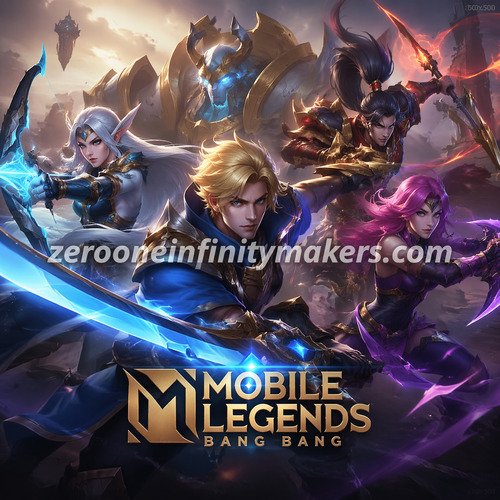
zerooneinfinitymakers.com – Mobile Legends: Bang Bang has remained one of the most popular mobile MOBAs because it offers a balance between mechanical skill, strategic planning, and team coordination. Every match creates a unique battlefield where players must adapt to changing conditions, different hero combinations, and unpredictable decisions from both teammates and opponents. While hero abilities and item builds are important, they represent only a portion of what determines victory.
Many players spend countless hours learning combos and practicing mechanics, yet they often overlook the strategic concepts that separate average competitors from exceptional ones. Understanding hero responsibilities, map control, objective priorities, and team dynamics allows players to consistently perform at a high level regardless of the heroes they choose.
The diversity of heroes in Mobile Legends is one of the game’s greatest strengths. Each hero is designed to fulfill a specific purpose, contributing unique advantages to a team’s overall strategy. Some heroes dominate through raw damage, while others create opportunities through crowd control, protection, mobility, or utility. Learning how these different strengths interact is essential for long-term improvement.
Success in Mobile Legends comes from more than individual performance. It comes from understanding how every action influences the larger flow of the game. A well-timed rotation, a properly executed objective contest, or a carefully planned team fight can often have a greater impact than securing multiple kills. Players who develop this broader perspective gain a significant advantage over those who focus only on immediate results.
Understanding Hero Categories and Their Strategic Purpose
Every hero belongs to a role that defines how they contribute to a team’s success. These roles create structure and help teams cover essential aspects of gameplay.
Marksmen are among the most influential heroes during the later stages of a match. Their ability to deliver sustained damage makes them valuable for both team fights and objective destruction.
Heroes such as Claude, Melissa, Brody, and Beatrix become increasingly dangerous as they acquire items. Their power grows steadily throughout the game, allowing them to transform into primary damage dealers capable of deciding major engagements.
However, marksmen often face challenges during the early game. Their relatively fragile nature makes them vulnerable to aggressive opponents who attempt to delay their development. For this reason, efficient farming becomes their highest priority.
Successful marksman players understand the importance of resource management. Every minion wave represents an opportunity to accelerate item progression. Missing resources or engaging in unnecessary fights can significantly delay power spikes and reduce overall effectiveness.
Positioning remains the most critical skill for marksman players. Even the strongest marksman can be eliminated quickly if caught out of position. Maintaining safe distances while maximizing damage output requires constant awareness and discipline.
When supported effectively and given sufficient resources, marksmen often become the centerpiece of their team’s late-game strategy.
Mage Heroes and Their Ability to Control Space
Mages contribute through a combination of damage, utility, and battlefield control. Their abilities often influence how opponents move and how team fights unfold.
Heroes like Xavier, Lunox, Novaria, and Valentina excel at applying pressure from a distance while creating zones of danger that enemies must respect. Their presence alone can alter positioning and limit available options for opponents.
One of the greatest strengths of mages is their ability to impact multiple areas of the map. Strong wave-clearing capabilities allow them to rotate efficiently and support teammates in different lanes.
Effective mage players focus heavily on timing. Using powerful abilities at the right moment can determine whether a fight is won or lost. Poor timing, on the other hand, can leave a team without critical resources when they are needed most.
Mages also play a major role in objective contests. Their ability to damage multiple enemies and control key areas makes them extremely valuable during Turtle and Lord engagements.
A skilled mage can influence the game far beyond simple damage numbers by shaping the battlefield itself.
Fighter Heroes and Their Flexible Role in Every Stage
Fighters are among the most versatile heroes in Mobile Legends. They combine durability with offensive potential, allowing them to adapt to a variety of situations.
Heroes such as Yu Zhong, Terizla, Arlott, and Paquito excel in side lanes while remaining highly effective during team fights. Their ability to survive extended engagements gives them a unique presence on the battlefield.
Fighter players must constantly evaluate where they can provide the greatest value. Sometimes this means joining teammates for objectives, while at other times it involves applying pressure through split pushing.
This flexibility creates strategic challenges for opponents. A fighter pushing a side lane forces enemies to choose between responding to the pressure or grouping for objectives elsewhere.
Understanding these trade-offs is essential for maximizing a fighter’s impact.
The best fighter players recognize that success often comes from creating difficult decisions for the enemy team rather than simply securing eliminations.
Building and Maintaining Map Control
While heroes provide the tools necessary for success, map control determines how effectively those tools can be used. Teams that dominate the map often control the pace of the game.
The early game revolves around efficiency. Players seek to maximize gold and experience while minimizing mistakes that could slow their progression.
Strong lane management is particularly important during this phase. Controlling minion waves allows players to create opportunities for rotations while maintaining economic growth.
Different heroes have different priorities. Some aim to pressure opponents immediately, while others focus on farming safely until they reach important item milestones.
Regardless of role, maintaining awareness of enemy movements is essential. Avoiding unnecessary deaths preserves momentum and keeps resource generation consistent.
Teams that establish strong foundations during the early game often enter the mid game with greater flexibility and control.
Objective Control as a Source of Long-Term Advantage
Objectives provide some of the most valuable rewards available in Mobile Legends. The Turtle offers gold and experience, while turrets grant territorial control and increased access to resources.
Successful teams treat objectives as central priorities rather than secondary goals. Every rotation, engagement, and positioning decision should consider upcoming objectives.
Preparation is often more important than execution. Establishing vision, clearing waves, and arriving early can create advantages before a contest even begins.
Players who consistently prioritize objectives develop stronger habits and achieve greater long-term success.
Unlike kills, which provide temporary rewards, objectives create lasting advantages that continue influencing the match.
Vision Control and Information Gathering
Information is one of the most valuable resources in competitive gameplay. Knowing where opponents are located allows teams to make smarter decisions and avoid unnecessary risks.
Vision control involves monitoring key areas of the map and denying enemies opportunities to create surprise engagements. Tanks and supports frequently take the lead in this process, but every player contributes through awareness and communication.
Teams with superior information can rotate more confidently, secure objectives more safely, and anticipate enemy movements more effectively.
Conversely, teams lacking information often find themselves reacting rather than acting.
Maintaining strong vision control creates a strategic advantage that extends throughout every stage of the game.
As matches progress, team fights become increasingly important. The ability to execute effectively under pressure often determines which team secures victory.
Understanding Positioning Responsibilities
Every role has specific positioning requirements during team fights. Tanks should occupy the frontline and absorb pressure, while marksmen and mages remain protected in the backline.
Fighters often operate between these groups, creating disruption and applying pressure where needed. Assassins look for opportunities to reach vulnerable targets without exposing themselves unnecessarily.
Maintaining proper positioning allows heroes to maximize their strengths while minimizing weaknesses.
Even minor positioning errors can have significant consequences during late-game engagements. Players who consistently position well contribute more effectively and survive longer.
Managing Cooldowns and Engagement Timing
Abilities represent valuable resources that must be used carefully. Understanding cooldowns creates opportunities to exploit weaknesses and avoid unfavorable situations.
If an enemy initiator has recently used an ultimate ability, their team may be significantly less threatening for a short period. Recognizing these windows allows teams to apply pressure with reduced risk.
Similarly, knowing when key allied abilities are available helps coordinate stronger engagements.
Timing often determines whether a fight succeeds or fails. Patience and awareness frequently produce better results than reckless aggression.
Closing Out Games Through Intelligent Decisions
The final stages of a match require discipline. Teams with advantages must avoid unnecessary mistakes while continuing to pressure objectives.
The Lord becomes especially important during this phase because of its ability to assist with sieging structures. Securing and utilizing the Lord effectively can create overwhelming pressure.
However, obtaining the Lord is only part of the challenge. Teams must coordinate lane pressure, maintain vision control, and avoid giving opponents opportunities to recover.
Successful teams understand that closing out games requires the same level of focus and discipline that was needed to build advantages in the first place.
Conclusion Mobile Legends Hero Excellence: Mastering Roles, Reading the Map, and Becoming a More Complete Player
Mobile Legends is a game that rewards players who combine mechanical skill with strategic understanding. Every hero contributes unique strengths, but success depends on how effectively those strengths are applied within the larger context of the match.
Marksmen provide scaling damage, mages control space, fighters create pressure, and every other role contributes in meaningful ways. Understanding these responsibilities allows players to make smarter decisions and maximize their impact.
Beyond hero mastery, objective control, map awareness, vision management, and team coordination remain essential components of victory. Players who focus on developing these skills consistently improve regardless of changing metas or hero balance updates.
Ultimately, becoming a stronger Mobile Legends player is about learning to see the entire battlefield rather than focusing only on individual moments. Those who master this broader perspective will find themselves making better decisions, supporting their teammates more effectively, and achieving greater success in every match they play.
